1. Introduction: Why Material Choice Issues for Your Crucible
Picking the best ceramic crucible is not simply a technical detail; it is a foundational decision that impacts the success of your high-temperature processes. The crucible works as the main container for melting, sintering, and heat-treating materials, and its efficiency straight affects product pureness, energy effectiveness, and functional safety and security. At Ozbo, we understand that every application has special needs. As a specialized distributor of sophisticated ceramic products and tailored production services, we give high-purity ceramic powders and completed crucible solutions to sectors worldwide. This overview offers a comprehensive contrast of the most common ceramic crucible products, assisting you browse the complex landscape of alternatives to discover the excellent match for your specific requirements. Our goal is to equip you with the expertise to make an educated decision, ensuring optimum performance and longevity for your crucial procedures.
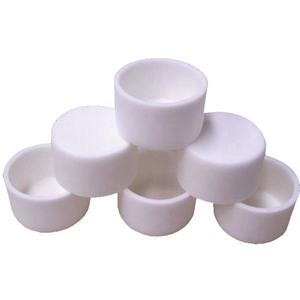
(Ceramic Crucible)
2. Alumina Crucibles: The Versatile Workhorse
Alumina, or aluminum oxide (Al2O3), is one of the most widely used ceramic product for crucibles, making its online reputation as a dependable and flexible workhorse. High-purity alumina crucibles, with an Al2O3 web content above 99%, use a phenomenal balance of homes that make them ideal for a large variety of applications. Their popularity originates from their excellent chemical inertness, great thermal security, and cost-effectiveness contrasted to more specialized porcelains. For numerous common laboratory and commercial processes, an alumina crucible provides a dependable and cost-effective option. Its extensive accessibility and well-understood qualities make it a best choice for users who require a tested, all-around performer without the premium price connected with sophisticated products.
Alumina crucibles exhibit exceptional high-temperature performance. They can endure continual use at temperature levels as much as 1600 ° C and sustain temporary direct exposure as much as 1800 ° C. This broad operating temperature level array covers the needs of many ceramic sintering, glass melting, and steel heat-treating procedures. In addition to thermal durability, they boast strong resistance to chemical corrosion, shielding the crucible from destruction by many acids, alkalis, and molten materials. Furthermore, high-purity alumina crucibles are made to withstand thermal shock, suggesting they stand up to cracking when based on rapid temperature modifications. This combination of high pureness, temperature level resistance, and chemical stability makes alumina a trustworthy and functional selection for routine procedures.
Nevertheless, alumina crucibles do have restrictions. They are not suggested for usage with materials that chemically strike alumina, such as molten alkali steels or particular changes. Their thermal conductivity is less than a few other sophisticated porcelains like silicon carbide or light weight aluminum nitride, which can result in longer heating and cooling cycles and less consistent temperature distribution. For applications requiring very high thermal conductivity, premium thermal shock resistance, or absolute non-wetting with certain molten metals, alternative products like silicon carbide, aluminum nitride, or boron nitride might be better suited. Understanding these compromises is essential to selecting a crucible that not just satisfies your temperature requirements but likewise maximizes your whole procedure.
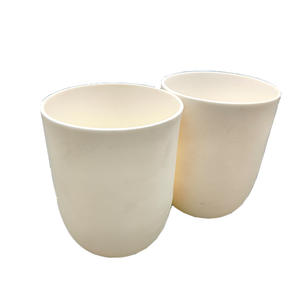
(Alumina crucible)
3. Silicon Carbide Crucibles: The High-Performance Champion
Silicon carbide (SiC) crucibles stand for a substantial step up in performance, providing a mix of high strength, exceptional thermal conductivity, and exceptional wear resistance. These crucibles are the common choice for requiring commercial applications, particularly in metal spreading and melting, where fast warm transfer and toughness are extremely important. Contrasted to standard clay-graphite or alumina crucibles, SiC crucibles are denser, more powerful, and extra immune to erosion, causing a substantially longer life span. Their exceptional thermal conductivity, commonly 3 to five times that of alumina, makes sure faster heating, even more consistent temperature levels throughout the melt, and lowered energy usage. This effectiveness equates to greater performance and reduced functional expenses.
The efficiency of SiC crucibles is additionally specified by their particular manufacturing process. Several kinds of SiC crucibles are offered, each with unique residential properties. Reaction-bonded silicon carbide (RB-SiC) is produced by infiltrating a permeable SiC preform with molten silicon, which responds to develop added SiC that bonds the structure. This procedure is affordable for big, complex shapes. Nonetheless, RB-SiC has some recurring cost-free silicon, which can restrict its optimum use temperature level and chemical resistance. On the other hand, pressureless sintered silicon carbide (SSiC) is made by sintering high-purity SiC powder at heats without applied stress, leading to a totally dense, very pure product with excellent mechanical buildings and chemical resistance. SSiC provides exceptional efficiency in extreme atmospheres however at a higher expense. Recrystallized silicon carbide (RSiC) is produced by a high-temperature evaporation-condensation process, producing a porous structure with outstanding thermal shock resistance and high purity, making it excellent for applications entailing extreme temperature slopes. Each kind offers various performance and budget plan needs.
When choosing a SiC crucible, it is critical to take into consideration the particular type that best matches your process conditions. For basic steel melting, reaction-bonded SiC provides a great balance of performance and cost. For applications requiring maximum purity, chemical resistance, and high-temperature toughness, pressureless sintered SiC is the exceptional choice. If your process entails quick and repetitive thermal cycling, recrystallized SiC’s exceptional thermal shock resistance is important. Ozbo can offer guidance on selecting the ideal SiC crucible type, ensuring you obtain the right product for your certain melting, sintering, or heat-treating application. Our know-how in innovative ceramics permits us to customize options that make the most of effectiveness and crucible life-span.
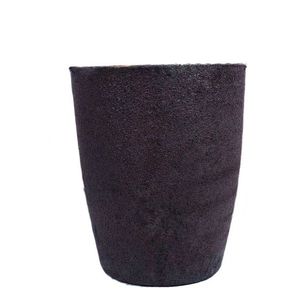
(Silicon carbide crucibles)
4. Advanced Nitride Ceramics: Aluminum Nitride, Silicon Nitride, and Boron Nitride
For specialized applications where traditional ceramics fail, advanced nitride ceramics offer unmatched performance. Aluminum nitride (AlN), silicon nitride (Si3N4), and boron nitride (BN) each have distinct homes that make them important in state-of-the-art sectors like semiconductor production, electronic devices, and aerospace. These products are engineered to meet severe needs, including ultra-high thermal conductivity, outstanding thermal shock resistance, and chemical inertness in the most harsh atmospheres. While they command a greater price point than alumina or standard SiC, their efficiency advantages can be vital for procedure success and item top quality in advanced applications.
Light weight aluminum nitride crucibles are prized for their incredibly high thermal conductivity, which can be over 5 times that of alumina. This residential or commercial property permits incredibly effective and consistent warm transfer, making AlN suitable for applications requiring exact temperature control, such as crystal development and semiconductor handling. AlN also has a thermal expansion coefficient carefully matched to silicon, lowering thermal anxiety and boosting compatibility with silicon wafers. It can stand up to temperature levels up to 1400 ° C in air and much higher in inert ambiences, and it uses excellent electric insulation. Nonetheless, AlN is susceptible to oxidation at really heats and can be a lot more challenging to maker than some other ceramics, which can impact manufacturing expenses.
Silicon nitride crucibles are renowned for their superior resistance to thermal shock and their non-wetting actions with many liquified steels, especially aluminum. Si3N4 can be subjected to fast temperature level modifications from area temperature level as much as 1000 ° C without cracking, a building that significantly expands its life span in cyclic home heating procedures. It preserves high toughness at elevated temperatures and shows excellent chemical security, resisting assault from most not natural acids and lots of organic substances. This combination of homes makes silicon nitride an exceptional choice for handling aggressive liquified steels and for applications where the crucible is subjected to severe thermal biking.
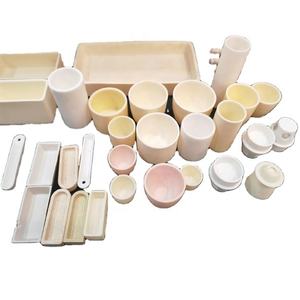
(Advanced Nitride Ceramics)
Boron nitride crucibles offer an unique set of advantages, including excellent machinability and severe chemical inertness. BN is just one of minority porcelains that can be easily machined into facility, high-precision forms using basic devices, which is a significant benefit for custom-made crucible designs. It shows really low thermal growth and exceptional thermal shock resistance, efficient in holding up against duplicated satiating from 1500 ° C without cracking. BN is chemically steady and does not react with many liquified metals, making it perfect for thawing high-purity alloys and for applications where crucible contamination must be prevented. It can be made use of at as much as 1800 ° C in a vacuum and as much as 2100 ° C in an inert atmosphere. However, BN has lower mechanical strength and is extra susceptible to oxidation in air at heats, limiting its usage to protective ambiences or vacuum problems.
5. Specialty Oxide Ceramics: Quartz, Mullite, and Spinel
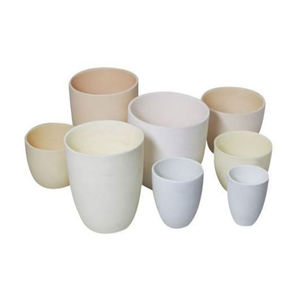
Beyond the typically used alumina and advanced nitrides, a variety of specialty oxide ceramics uses targeted advantages for specific applications. Fused quartz, mullite-based structures like diamond mullite and cordierite mullite, and magnesium light weight aluminum spinel each offer a distinct mix of residential properties such as phenomenal pureness, high thermal shock resistance, or exceptional chemical resistance to details slags. These products are typically picked for particular niche applications where their specific strengths surpass the more comprehensive performance of even more general-purpose porcelains. Recognizing these specialized options enables you to fine-tune your material selection for ideal process outcomes.
Fused quartz crucibles are specified by their exceptionally high purity, with SiO2 purity typically exceeding 99.998%. This makes them the material of option for the semiconductor and solar industries, where they are made use of for the critical procedure of pulling single-crystal silicon. Their high pureness ensures that the liquified silicon is not polluted, a non-negotiable demand for producing high-quality electronic-grade silicon wafers. Fused quartz also offers outstanding thermal shock resistance and a really low coefficient of thermal growth, making it stable under quick temperature level modifications. Nevertheless, quartz crucibles are consumable products, usually used for a solitary crystal pull, and have a relatively low maximum use temperature level of around 1600 ° C. ^
. Corundum mullite and cordierite mullite crucibles combine the residential properties of their constituent products to use balanced performance. Diamond mullite, a composite of alumina (corundum) and mullite, gives high thermal shock resistance, excellent chemical security, and superb mechanical stamina at heats. Its thermal growth coefficient is tiny, making it dimensionally secure under thermal cycling. Cordierite mullite leverages the very reduced thermal growth of cordierite, which offers it remarkable resistance to thermal shock, combined with the high-temperature toughness of mullite. These crucibles are generally utilized in the ceramics sector for shooting kiln furnishings and in applications where excellent thermal shock resistance and moderate temperature level capacity (up to 1400 ° C )are required. They stand for a cost-efficient option for lots of industrial heating processes.
Magnesium aluminum spinel (MgAl2O4) crucibles are a high-performance oxide choice understood for their exceptional resistance to thermal shock and chemical strike, especially from standard slags and antacids metals. With a melting factor of 2135 ° C and a refractoriness of about 1900 ° C, spinel can stand up to very heats. It is made use of in numerous induction furnaces and is specifically appropriate for melting non-ferrous metals and managing corrosive slags. Spinel crucibles can accomplish a lengthy service life, often exceeding 100 cycles in applications below 1300 ° C. While not as widely utilized as alumina, spinel’s certain resistance to fundamental settings makes it an indispensable material in specific metallurgical and glass-making processes.
(Specialty Oxide Ceramics)
6. Silicon Nitride-Bonded Silicon Carbide Crucibles
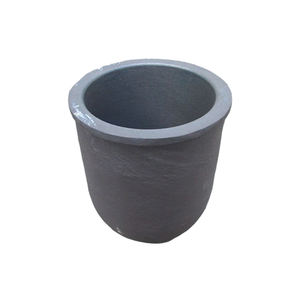
Silicon nitride-bonded silicon carbide (Si3N4-SiC) represents a composite product that incorporates the high thermal conductivity and use resistance of SiC with the exceptional thermal shock resistance and chemical security of Si3N4. In this product, silicon carbide grains are bound with each other by a matrix of silicon nitride, which develops during a response sintering procedure. This composite framework leads to a crucible material that is highly resistant to thermal cycling, mechanical tension, and deterioration from liquified steels and slags. The Si3N4 bond offers a strong, refractory connection in between the SiC particles, improving the overall toughness and thermal shock resistance of the material beyond that of reaction-bonded SiC alone.
These crucibles are particularly fit for demanding applications in the metallurgical and foundry sectors. They are used in various furnace types for melting and holding non-ferrous steels, such as aluminum, copper, and zinc alloys. The product’s resistance to moistening and corrosion by molten aluminum makes it a remarkable selection for light weight aluminum factories, where crucible life is a significant expense factor. Additionally, silicon nitride-bonded silicon carbide is utilized in the manufacturing of riser tubes and other elements that enter call with hostile thaws. The product’s capacity to endure both the thermal tensions of cyclic operation and the chemical assault of corrosive slags causes considerably longer service life compared to standard clay-graphite or alumina crucibles.
When choosing a silicon nitride-bonded silicon carbide crucible, think about the certain operating problems, including temperature level, ambience, and the kind of metal or slag it will contact. These crucibles provide a substantial improvement in efficiency and durability for requiring industrial melting applications, frequently warranting their higher first expense via minimized downtime and fewer substitutes. Ozbo offers experience in choosing the appropriate composite crucible material to meet your certain procedure requirements, aiding you attain better efficiency and lower overall operating expense. Our sophisticated ceramic services are engineered for the hardest industrial difficulties.
7. Exactly how to Select the Right Ceramic Crucible for Your Application
(Silicon Nitride-Bonded Silicon Carbide Crucibles)
Picking the ideal ceramic crucible involves a systematic evaluation of your process needs. The first and most crucial criterion is the maximum operating temperature. You must choose a material that can easily withstand your process’s height temperature, with a margin of safety and security. Think about the ambience also; some products, like boron nitride and silicon nitride, are best utilized in vacuum cleaner or inert atmospheres at their highest temperature levels, while alumina and silicon carbide execute well in oxidizing atmospheres. The crucible’s compatibility with the materials it will contain is equally important. It should be chemically inert to the cost and any type of fluxes or slags to avoid contamination and crucible destruction.
Past temperature level and chemical compatibility, consider thermal shock resistance. If your procedure includes rapid heating or cooling, a product with reduced thermal growth and high thermal conductivity, like silicon nitride or recrystallized silicon carbide, is important to stop fracturing. The needed crucible shape and size likewise influence product choice. While products like boron nitride are easily machined to intricate forms, others like pressureless sintered silicon carbide might have limitations. Finally, evaluate the cost of the crucible against its predicted life span. An extra expensive crucible that lasts 10 times longer is typically extra affordable in the future than a cheaper one that calls for constant substitute.
For conventional laboratory and several general commercial processes, high-purity alumina crucibles use an outstanding equilibrium of performance, chemical resistance, and expense. For non-ferrous steel melting and applications requiring high thermal conductivity and put on resistance, silicon carbide crucibles are the remarkable option. For the most demanding applications including severe thermal cycling, corrosive thaws, or ultra-high pureness requirements, advanced products like silicon nitride, aluminum nitride, boron nitride, or composite materials are necessary. By meticulously analyzing your details procedure specifications and talking to product experts like Ozbo, you can select that maximizes performance, expands crucible life, and maximizes your operational performance.
8. Verdict: Partnering with Ozbo for Your Crucible Demands
Selecting the best ceramic crucible is a critical choice that straight influences the high quality, effectiveness, and expense of your high-temperature procedures. As we have actually explored, the landscape of ceramic crucible products is diverse, with each choice– from the flexible alumina to the high-performance silicon carbide, the sophisticated nitrides, and the specialized oxides– supplying an one-of-a-kind set of buildings customized to specific applications. Comprehending these distinctions is the initial step towards maximizing your process. The material you pick have to line up with your temperature level requirements, chemical setting, thermal cycling conditions, and budget plan restrictions to guarantee dependable and constant outcomes.
At Ozbo, we are committed to being more than simply a supplier; we are your partner in product choice and process optimization. With our deep experience in innovative porcelains and a thorough item range that consists of high-purity ceramic powders and custom-fabricated components, we are equipped to lead you through the choice procedure. Our objective is to aid you locate not simply a crucible, yet the optimal solution that enhances your productivity and item quality. We understand the intricacies of each product and can offer tailored recommendations based upon your special operational obstacles.
(Ceramic Crucible)
We invite you to check out how Ozbo’s innovative ceramic solutions can meet your particular crucible needs. Whether you need a standard alumina crucible for routine lab work or a custom-engineered silicon nitride crucible for a requiring commercial process, our team is ready to help. Call us today to review your application, and let us aid you achieve quality in your high-temperature procedures with the right ceramic crucible material. Partner with Ozbo for dependability, performance, and skilled support in every crucible you utilize.
9. Provider
Ozbo focus on the research and development, production and sales of ceramic products, serving the electronics, ceramics, chemical and other industries. Since its establishment in 2015, the company has been committed to providing customers with the best products and services, and has become a leader in the industry through continuous technological innovation and strict quality management.
Our products includes but not limited to Aerogel, Aluminum Nitride, Aluminum Oxide, Boron Carbide, Boron Nitride, Ceramic Crucible, Ceramic Fiber, Quartz Product, Refractory Material, Silicon Carbide, Silicon Nitride, ect. If you are interested in aluminum nitride, please feel free to contact us.
Tags:Ceramic Crucible,alumina crucible,silicon carbide crucibles
All articles and pictures are from the Internet. If there are any copyright issues, please contact us in time to delete.
Inquiry us